
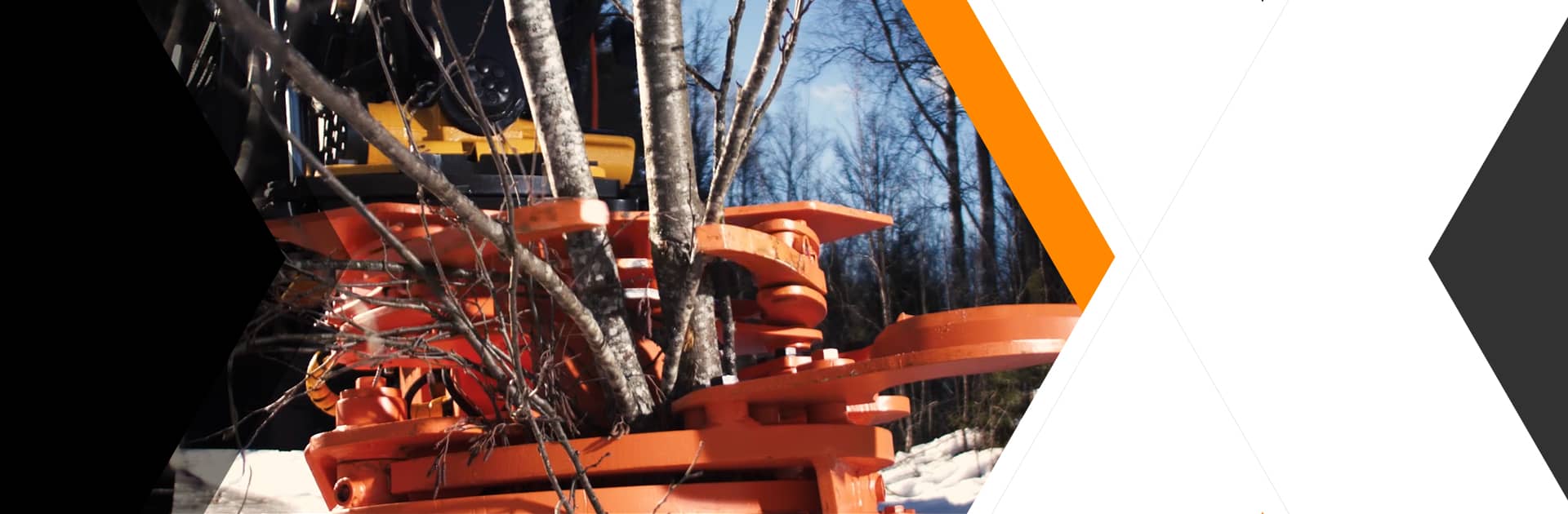
Upgrading existing power grids and building new transmission lines place stringent demands on contractor efficiency and workmanship. Even as underground cabling becomes more common, overhead lines and wooden utility poles remain indispensable across rugged terrain. Precision is vital during pole erection, as installation errors can reduce a pole’s service life by decades. The greatest risk is mechanical damage to the wood’s outer surface: if the preservative barrier is punctured by gripping teeth, the core is exposed to moisture, which can trigger rot within the first few years.
Modern overhead line construction demands attachments capable of handling heavy poles swiftly and gently. A hydraulically operated pole grapple bucket, or pole bucket, is engineered specifically for this purpose. It empowers the operator to manage the entire installation workflow directly from the cab – from lifting off the ground and plumbing the pole to backfilling the trench. With no need for ground crew assistance, on-site safety is significantly enhanced and operations proceed smoothly even in adverse weather conditions.
The Role of Modern Pole Buckets in Infrastructure Construction
Traditionally, installing power and telecom poles required multiple work phases and a large ground crew. Rigging with straps and chains is time-consuming and places workers at risk near open excavations. A pole bucket streamlines the entire process into a single-operator, single-machine operation: digging the hole, transporting the pole, raising it upright, positioning it precisely, and backfilling the excavation.
Equipment is categorized by base machine weight class to ensure optimal stability and performance. Lighter base machines, such as backhoe loaders and compact tracked excavators under 12 tonnes, require a weight-optimized attachment that maintains machine balance even at full reach. For major projects and excavators exceeding 12 tonnes, heavy-duty models are utilized to handle the heaviest utility poles while delivering ample force for soil compaction. For instance, the Axer PP15 offers a lightweight, highly agile option ideal for backhoes and tight job sites.
A versatile pole bucket also doubles as an efficient general-purpose excavation bucket. Thanks to its secure gripping geometry, it is equally suited for handling steel lighting columns and cable reels. This multifunctionality saves considerable time by eliminating attachment changes between work stages. To boost on-site productivity, explore our range of pole bucket models and select the perfect match for your project.
Adjustable Clamping Force: Protecting the Delicate Wood Surface
Controlling clamping pressure is among the most critical technical aspects of line installation. Utility poles are typically made of treated pine. While chemical impregnation protects the wood, it penetrates only the outer layers. Excessive clamping pressure or aggressive teeth will crush this protective shield, allowing moisture to seep into untreated heartwood and accelerating internal decay that can halve the pole’s expected 40–50 year lifespan.
To eliminate this risk, modern attachments incorporate adjustable hydraulic pressure control. A dedicated pressure relief valve limits the maximum force exerted by the clamping cylinder. Even if the operator applies full hydraulic power, the grapple closes only up to the preset limit. Clamping pressure remains uniform throughout lifting and alignment, securing the pole firmly without damaging the timber.
INGENIOUS SIMPLICITY AND QUALITY
Finnish design principles focus on building attachments that withstand extreme northern working conditions. Premium structural and quenched steels, dependable hydraulic components, and precision manufacturing ensure exceptional longevity. A clean, reliable hydraulic layout minimizes wear parts, keeping your operations running smoothly even in sub-zero temperatures.
Beyond pressure regulation, grapple geometry plays a key role in timber preservation. Curved clamping arms distribute force evenly over a large contact area. By eliminating localized stress peaks, damaging shear forces on the wood fibers are avoided – providing secure, damage-free handling even when poles are wet, icy, or slippery.
Maximizing On-Site Safety in Utility Contracting
Without specialized tools, pole erection involves several high-risk steps where crew members are exposed to open pits and suspended loads. Guiding poles manually or with slings carries severe hazards should soil collapse or weather shift abruptly. Modern pole buckets eliminate these risks by centralizing control inside the excavator cab. The operator lifts, positions, and aligns the pole independently without crew members standing in harm’s way.
A critical safety feature is the integrated pilot-operated check valve (hose burst valve) within the hydraulic circuit. This safety valve ensures the clamping arms maintain full grip on the pole even in the event of sudden pressure loss or a severed hydraulic line. This mechanical fail-safe prevents heavy poles from falling uncontrollably, protecting ground personnel and averting severe accidents.
Selecting the Right Size and Machine Requirements
Selecting the ideal pole bucket requires evaluating the base machine’s operating weight, hydraulic capacity, and the specific demands of the project. An oversized attachment compromises machine stability and slows cycle times when working at full reach. Reducer models are divided into distinct weight classes to guarantee both safety and peak productivity.
For compact equipment such as backhoe loaders and mini excavators, the Axer PP15 is the optimal choice in terms of weight and maneuverability, enabling high efficiency in confined spaces without overloading the machine. For excavators over 12 tonnes, the Axer PP25 provides the structural rigidity and clamping power needed to handle long, heavy utility poles across demanding terrain.
Durable Materials Ensure Long Service Life
In utility line construction, attachments face severe stress because they are also used for trench backfilling and soil compaction immediately following pole erection. The equipment must endure continuous abrasive wear and heavy impacts. High-grade attachments utilize high-strength wear steel and reinforced welds in high-stress zones, such as the grapple tips and bucket side plates.
Wear-resistant materials prevent structural fatigue and deformation when moving heavy earth or compacting rocky backfill. Superior build strength reduces maintenance downtime and significantly extends the tool’s service life – essential when working under tight deadlines, such as emergency storm-damage repairs.
BUILT FOR NORTHERN CONDITIONS
Reliability is the cornerstone of Finnish engineering and manufacturing. Built for years of heavy-duty operation, our products combine premium components with rigorous quality control. The Axer product family meets the needs of demanding contractors across Europe.
Utility network projects demand high productivity alongside strict environmental and quality compliance. Network operators require documented installation quality to maximize the grid’s lifecycle. The choice of attachment directly impacts profitability and project outcomes. Purpose-built pole buckets ensure installations are completed quickly and safely without damaging timber. Investing in field-proven equipment empowers contractors to meet ever-tightening standards year after year.
EQUIP YOUR SITE WITH A PREMIUM AXER POLE BUCKET
Ensure the quality and safety of your utility installations with Finnish-engineered attachments built for heavy-duty contracting. Axer pole buckets deliver precise control and unyielding durability in all conditions.
Contact us and request a quote ›